9 July 2026
A Rating Tells You What. A Conversation Tells You Why.
A rating tells you where you landed and nothing about how you got there. Here is why the follow-up question, the one a form can never ask and your clients never will, is where the useful feedback actually lives.
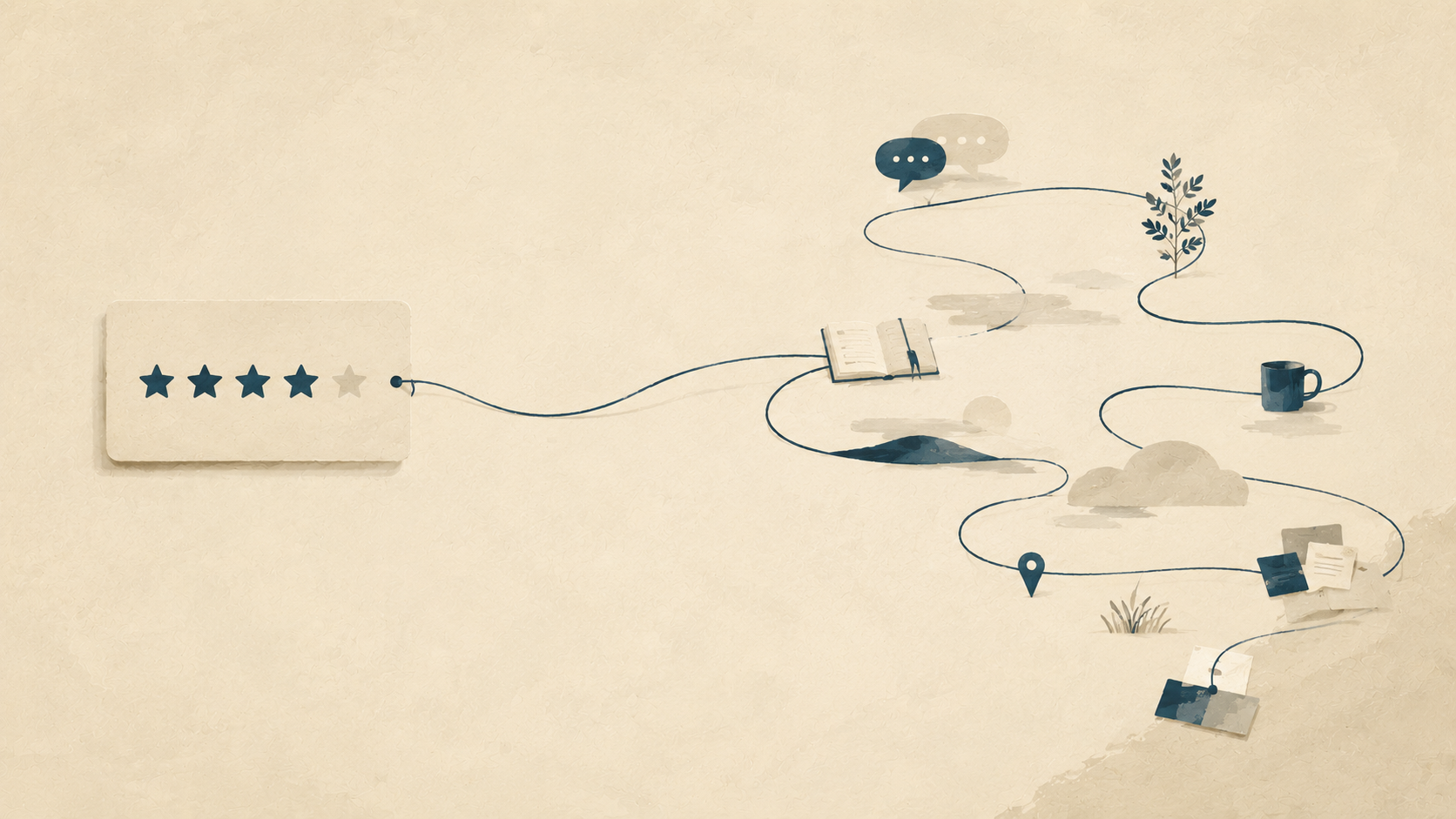
A Rating Tells You What. A Conversation Tells You Why.
Every feedback form you've ever sent has the same dead end built into it. Someone rates you a 3 out of 5, clicks submit, and moves on. You are left staring at a number with no idea what to do about it.
Three out of five on what, exactly? Compared to whom? Because of one bad week, or a pattern? Would a small change have made it a 5, or were you never going to win that one? The form can't tell you, because the moment the rating landed, the conversation was over. And the conversation is where all the useful information was.
A number is an answer with the reasons removed
Ratings are seductive because they're tidy. They average, they chart, they let you say your score went up half a point since last quarter. But a score is the very end of someone's thinking, with everything that led there stripped off.
When a client gives you a 3, they've quietly compressed a whole story into a single digit. A specific project. A moment things wobbled. A comparison to someone else they've worked with. A thing they wished you'd done differently but never said out loud. All of that is real, and all of it vanishes the instant it becomes a mark on a slider.
You don't need the number. You need the story it came from. And a form is built, almost perfectly, to throw that story away.
The follow-up question is the whole game
Think about how you'd get to the truth if you were doing this yourself, in person, and the other person was being candid.
They'd say the communication could have been better. You wouldn't write down "communication: 3" and thank them. You'd ask what they meant. They'd mention a stretch where they weren't sure what was happening on the project. You'd ask when. They'd describe the two weeks before a deadline when your updates went quiet. Now you have something you can actually fix. It took three questions to get from a vague rating to a concrete change, and a form can't ask a single one of them.
That question is where feedback stops being a scoreboard and starts being useful. Not the rating. The question after it. The trouble is that the people best placed to ask it, your clients, are usually the least willing, because pressing for detail about their own disappointment is awkward and they would rather just move on.
So the job is to have those questions asked well, by someone with no stake in protecting your feelings and no reason to let a vague answer slide.
What a good conversation does that a form can't
The point of a conversation isn't that it's longer or friendlier. It's that it can react. A few things fall out of that.
It can chase the vague answer. "It went well" is not information. A good interviewer treats that as the start, not the end, and gently asks for the moment behind it. Forms accept "it went well" and file it.
It can spot the interesting thing and follow it. Sometimes the useful signal shows up somewhere you didn't ask about. A conversation can notice that and pull the thread. A fixed list of questions walks straight past it.
It can tell a strong claim from a stray one. When someone says something surprising, the right response is to ask for an example. Either a concrete story appears, and now you know it's real, or it doesn't, and you know to weigh it lightly. A form gives every answer the same false confidence.
It can stay neutral. This is the part that matters most and is easiest to get wrong. The interviewer's job is to draw out what the person actually thinks, not to nudge them toward a flattering answer and not to defend you when they say something critical. No "but surely they did that well?" No steering. Just genuine curiosity about what happened, and the discipline to keep asking until the picture is clear.
None of that requires the person answering to be tough or unusually articulate. It just requires someone on the other side who knows to ask the next question, and who won't flinch when the answer is honest.
Why this matters more than it sounds
You might think you can fill in the gaps yourself. You got a low score on responsiveness, you have a guess about which client and which week, so you move on. But your guess is exactly the problem. You are filling a blank with the story you already believe, which is precisely the story that can't show you a blind spot.
The whole value of feedback is the part that surprises you. A rating rarely surprises you, because you supply the meaning yourself. A specific account of a moment you'd forgotten, or never noticed, is the thing that actually shifts how you see your own work. You only get that when someone asked the question you would never have asked yourself.
The short version
A rating tells you where you landed. It never tells you how you got there or how to land somewhere better. That lives in the conversation, in the answer to the question after the number, and it only comes out when someone knows to ask it, keeps asking until it's clear, and has no reason to soften what they hear. That is the difference between knowing your score and knowing what to do about it.
Trueings replaces the feedback form with a short, neutral conversation. It asks the follow-up questions your clients never would, then turns the answers into honest, confidential themes you can actually act on. See how it works.
More posts

4 July 2026
Why AI That Flatters You Is Worthless
Praise feels good and teaches you nothing. Here is why so much feedback comes out flattering, and what honest synthesis does differently: it names the hard thing plainly and keeps the one dissenting voice instead of smoothing it away.

23 June 2026
Why We Sometimes Show You Less: The Honest Math of Small Samples
Sometimes your feedback report shows broad themes instead of quotes and numbers. That is deliberate. Here is the honest reason we hold detail back when only a few people have answered, and why it protects the candour you actually want.

16 June 2026
Introducing Trueings
Why we built an AI that interviews the people you worked with, instead of another rating form, and how it returns an honest picture without ever exposing anyone.